Endorsements for the Fall 2026 Election
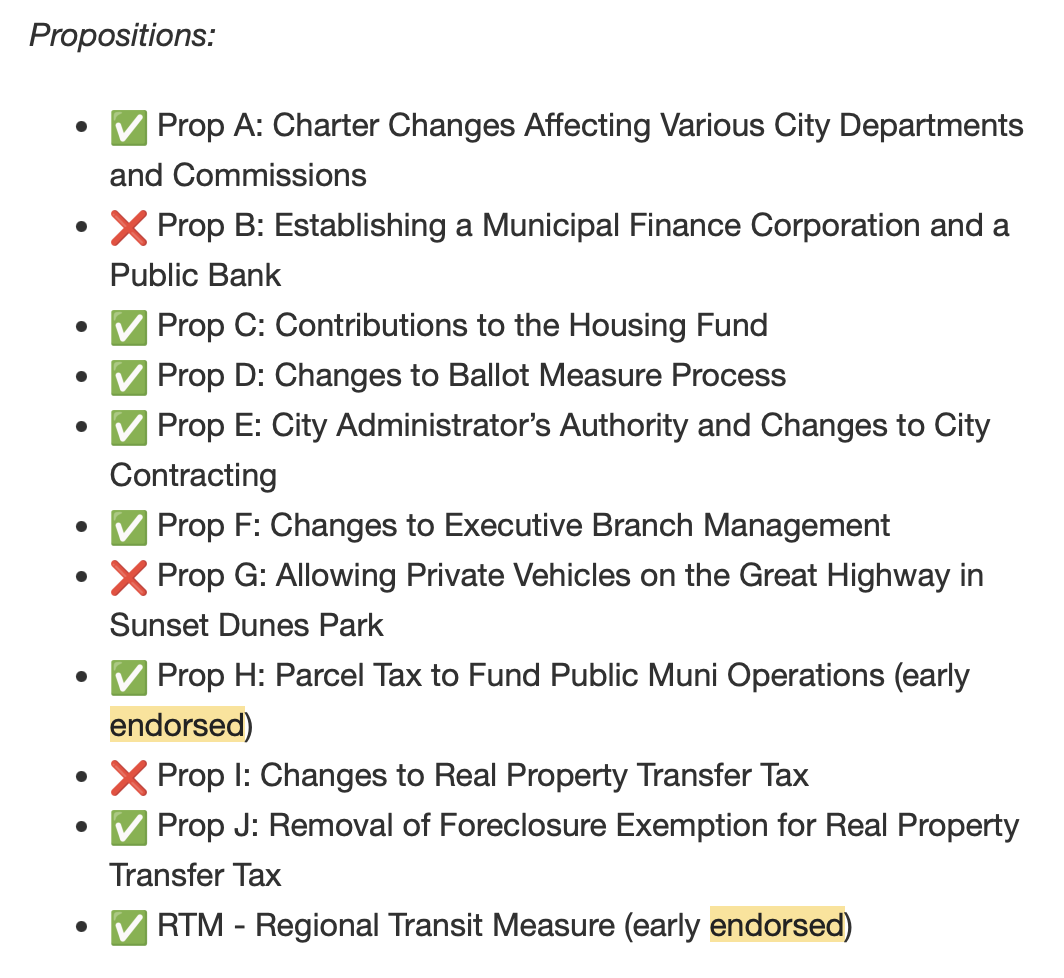
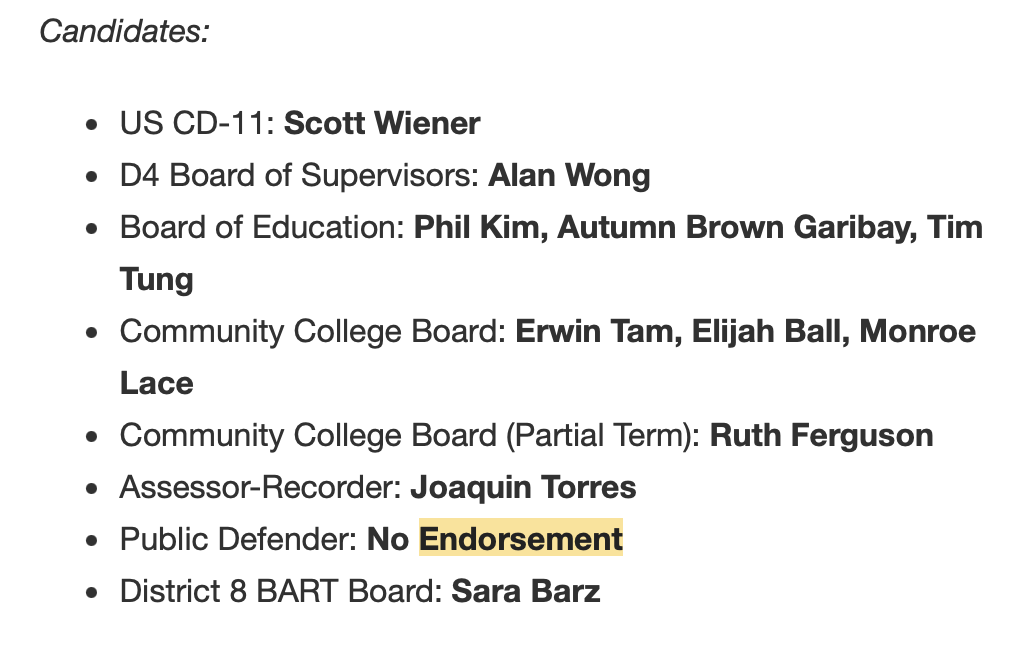
The Westside Family Democratic Club’s endorsements are chosen by member vote, and our voters are informed by the research of an Endorsement Committee that delves into the details of every local item on the ballot. For November 2026, members chose the following endorsements. Interested in why the club voted this way? Continue down the page for explanations of each endorsement!
San Francisco Candidates
Public Defender: No Endorsement
Mano Raju does not have an opponent and will be re-elected. Unfortunately, Raju is not adequately performing in the role. The public defender has one job: to ensure the accused have legal representation. Instead of doing that, Raju has declined to take on some cases, complaining of a high caseload. That failure to perform the duties of his office is inexcusable, and a judge held Raju in contempt of court for it. Raju does not deserve our endorsement, or your vote.
District 4 Supervisor: Alan Wong
Among the D4 candidates, Alan Wong stands out as the one we can rely on to bring a common-sense approach to the Board of Supervisors. Appointed last year by Mayor Lurie, Wong has voted in support of the Family Zoning plan, supports increased police staffing to boost public safety and reduce overtime costs, has worked to cut red tape for small businesses, and has already taken innovative steps like creating a process for San Franciscans to propose repeal or revision of unhelpful laws. He has done great work in his short time in office, and we look forward to seeing what he can do with a full term.
Board of Education: Phil Kim, Autumn Brown Garibay, and Tim Tung
Among the field of BOE candidates, three stand out. Phil Kim has performed well as Board of Education president since his appointment in August 2024, including spearheading a 4-3 board vote to bring back eighth grade algebra. Autumn Brown Garibay shows unusual tenacity and willingness to tackle the hard issues, coupled with pragmatic ideas and a drive to get things done. Tim Tung is similarly pragmatic and outcomes-focused, and will bring badly needed fiscal expertise to the BOE.
Community College Board: Elijah Ball, Erwin Tam, and Monroe Lace
City College has been troubled for over a decade; its accreditation was at risk and it lost 10 chancellors in a 13-year period. In 2024, this club endorsed a slate of practical, common-sense candidates who were running together; all are now on the Community College Board, and City College shows signs of stability and improvement for the first time in years. Elijah Ball, Erwin Tam, and Monroe Lace will support and continue that good work, and each brings special characteristics. Ball is a campus designer, who can help City College deal with its large portfolio of cash-draining properties. Tam is a finance expert, well-qualified to understand City College’s large financial problems. And Lace is a public school teacher who can help boost enrollment by building bridges between SFUSD and City College.
Community College Board Partial Term: Ruth Ferguson
This club endorsed Ruth Ferguson in 2024, and we stand by that endorsement. She has done good work at City College and we’d like to see more from her. Luckily, she’s running unopposed and will be elected.
Assessor-Recorder: Joaquin Torres
Joaquin Torres is running unopposed and will be re-elected. But he has also done a good job in office, not only fulfilling the responsibilities of the assessor-recorder (e.g., assessing and recording property values for tax purposes), but going the extra mile to educate the public about city government.
BART Board, District 8
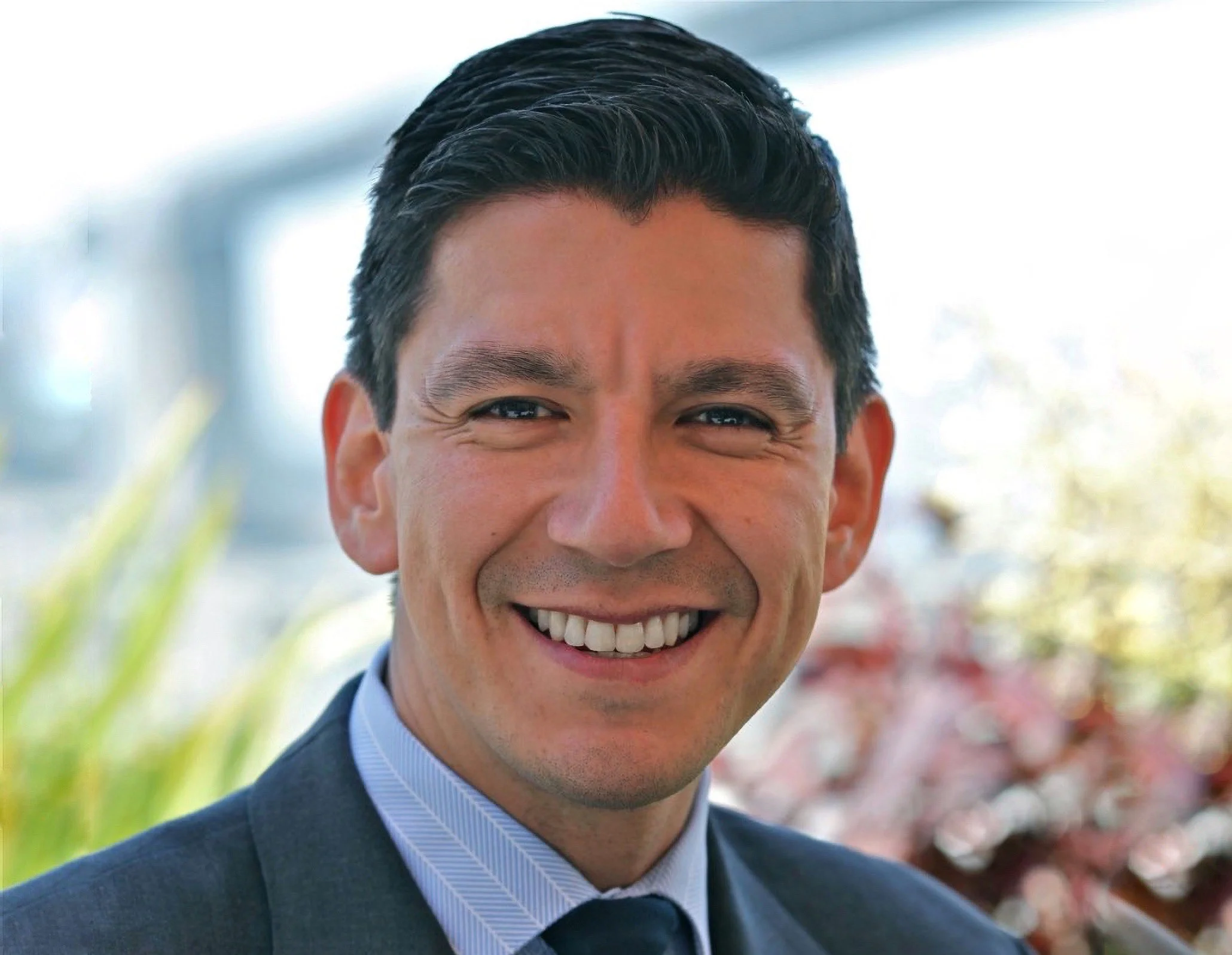
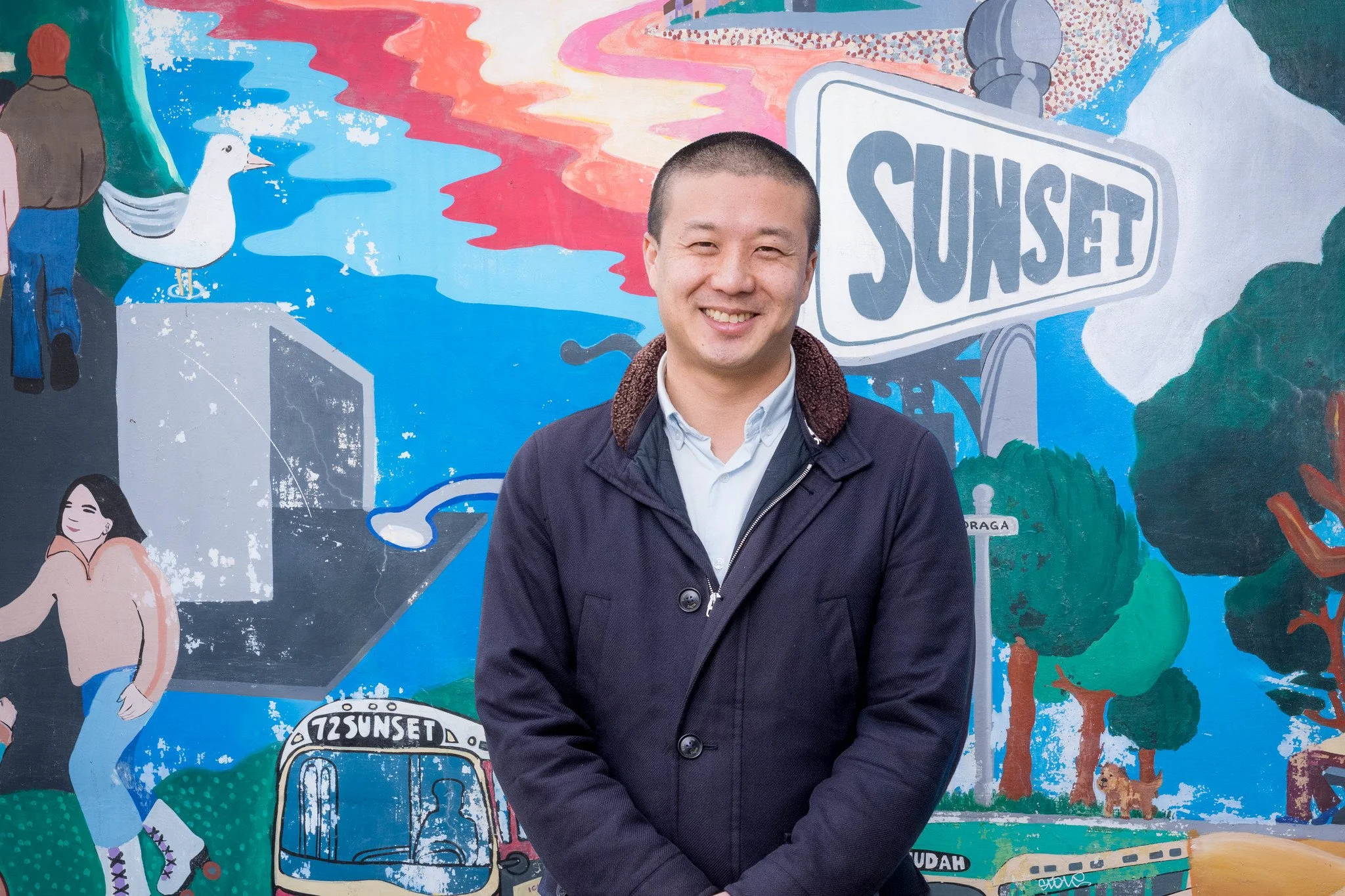
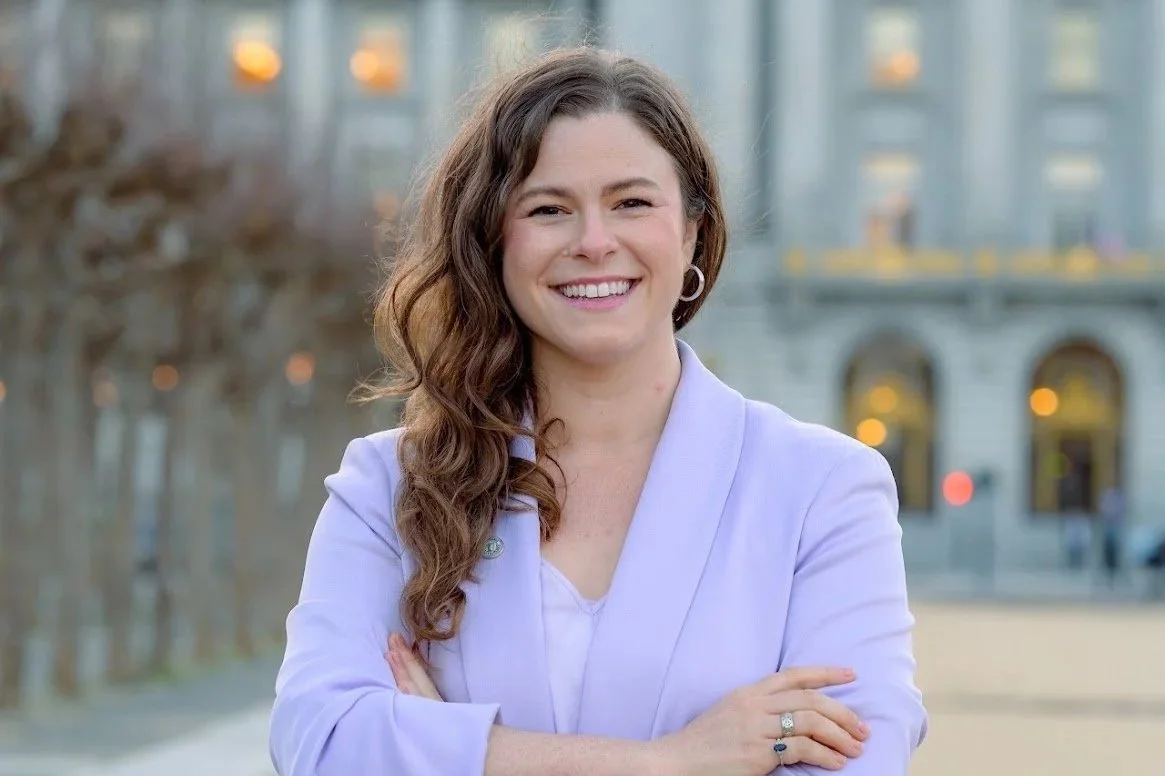
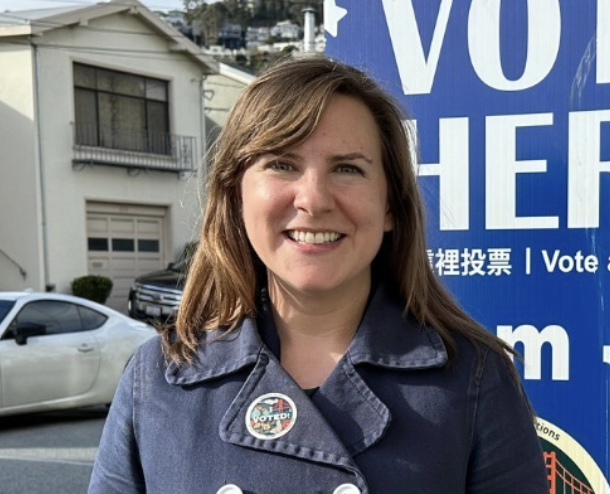
Sara Barz, this club’s president, is running unopposed, and we couldn’t be more excited to see her in this position. While Sara is a passionate advocate for public transit, she’s also a level-headed leader who explores all sides of issues and looks for fair, reasonable conclusions. She complements those leadership qualities with substantial industry experience. BART faces both short-term and long-term fiscal, infrastructural, and governance problems, and we need Sara on the BART Board and help fix them.



San Francisco Ballot Measures
Yes on Proposition A: Charter Changes Affecting Various City Departments and Commissions
Prop A was introduced by the Board of Supervisors to clean up numerous aspects of city government, mostly related to commissions and other city entities. For example, in 2024 voters considered multiple attempts to reduce the number of commissions. Prop A would not slash commissions, but it moves some of them under the administrative code (where they can be adjusted by the BOS without a ballot measure). The cleanup items in Prop A were meant to be non-controversial improvements that are widely agreed upon, and the measure does a good job of that. We support Prop A as a basic good governance reform measure.
No on Proposition B: Establishing a Municipal Finance Corporation and a Public Bank
Prop B would. create a municipal finance corporation and begin establishing the bureaucracy to support a public bank, which would not be created until it was funded with a future tax. While public banks aren’t necessarily bad, this proposal is a solution in search of a problem. San Francisco is served by many community banks, which already focus on community needs. Moreover, public banks have been previously tried in the US; the only one that hasn’t failed is a state public bank, rather than a city one. This city is still struggling to get the basics right, and our leaders shouldn’t get distracted with a difficult, sophisticated, and expensive project that doesn’t seem to solve any real problems.
Yes on Proposition C: Contributions to the Housing Fund
San Francisco already has a Housing Trust Fund, created in 2012, which receives $50.8 million per year from the city to build and maintain taxpayer-subsidized housing. It is scheduled to run until 2043. Prop C would impose a tax set-aside to expand the fund to more than $125 million per year and extend it until 2058. Subsidized housing typically relies on multiple income streams; San Francisco contributes some money, but so do affordable housing developers and potentially other governmental and nonprofit partners. We hope that expanding the Housing Trust Fund will support development of subsidized housing not only by directly funding new developments, but also by providing a reliable long-term income stream that gives federal, state, and nonprofit partners confidence that if they contribute to projects in SF, those projects will succeed.
Yes on Proposition D: Changes to Ballot Measure Process
This city’s ballots are choked with unnecessary ballot measures, many of which are imposed as bargaining chips, attempts to sabotage rival measures, or ways to confuse voters. The reason we have more measures than other cities is that the city makes it extremely easy to put things on the ballot. Prop D would raise the threshold for ballot access in several ways, while still making SF’s ballot more accessible than almost anywhere else in the country. Specifically, it would (1) raise the signature threshold to put a measure on the ballot from 2% of registered voters to 8% (still lower than peer jurisdictions); (2) eliminate the mayor’s ability to place a measure on the ballot unilaterally (a change supported by Mayor Lurie); (3) eliminate the ability of four supervisors to put a measure on the ballot (a majority of supervisors still could); (4) raise the threshold to call a special election from 10% of votes cast for mayor to 10% of registered voters; and (5) allow a measure’s proponents to withdraw it up until 102 days before the election. These are all sensible reforms that will simplify ballots and remove clutter while still protecting our democratic process.
Yes on Proposition E: City Administrator’s Authority and Changes to City Contracting
Today, having a contract approved in San Francisco can take 18 months and require approval from up to 14 separate reviewing departments. This complexity causes bureaucratic bloat and administrative expenses, making the city less nimble and deterring potential partners from doing business with the city. Prop E would ease the complexity by centralizing contracting authority under the City Administrator, extending the City Administrator’s term, and increasing the threshold for contracts that require Board of Supervisors review and approval. This is another practical measure to improve governance, and we hope it succeeds.
Yes on Proposition F: Changes to Executive Branch Management
City management in San Francisco is spread across 130 boards and 50 department heads, diffusing responsibility until nobody is accountable. This measure does a number of things to empower the mayor to run our city’s executive branch. In particular, it:
Gives the mayor direct authority to hire and fire most department heads (without commission approval);
Makes many city commissioners at-will appointees who can be removed without cause by the official who appointed them;
Restores the mayor’s authority to appoint deputy mayors to directly supervise departments; and
Allows the mayor to merge, streamline, or consolidate city departments.
Prop F doesn’t just empower the mayor, it makes the mayor accountable. When San Franciscans elect a mayor, that person should have the power to get the job done—and should have no excuse for failure.
No on Proposition G: Allowing Private Vehicles on the Great Highway in Sunset Dunes Park
In 2022, voters rejected Proposition I, which would have opened Great Highway to cars full-time. In 2024, voters passed Proposition K, which closed Great Highway to cars entirely and turned it into Sunset Dunes park. We are now being asked to consider the same issue a third time. Let’s put this to rest once and for all: No on G, and yes to Sunset Dunes.
Yes on Proposition H: Parcel Tax to Fund Public Muni Operations
SF’s Municipal Transportation Agency has been making important changes to improve system efficiency and reduce operational costs, but the drag of SF’s slow downtown recovery has been too much. Muni needs more funding and we can’t allow the city to lose mobility at this critical time. This measure would raise funding through a temporary parcel tax amounting to $129 per year for properties under 3,000 square feet, and progressively more for larger properties. We endorse a resounding “yes” on the Muni funding measure.
No on Proposition I: Changes to Real Property Transfer Tax
San Francisco imposes one of the country’s highest taxes on real estate transfers over $10 million. Today, the city has flexibility on how to direct that money. It may go to housing, transit, closing budget gaps, funding homeless shelters, etc. Prop I would remove that flexibility and impose a mandatory “set-aside” under which the city would be required to spend these transfer tax proceeds on taxpayer-subsidized housing. What’s more, it would permanently dictate that 60% go to building subsidized housing, 25% go to preserving existing subsidized housing, 10% go to eviction prevention and emergency rental assistance, and 5% go to administrative costs. None of these requirements could be changed without voting on another ballot measure.
This is simply bad policy. San Francisco’s budget is already choked with set-asides, severely limiting our government’s flexibility. We should not further constrain it with this measure, which not only permanently directs the money but then requires it to be permanently divided into buckets that may not make sense—now or in the future.
Yes on Proposition J: Removal of Foreclosure Exemption for Real Property Transfer Tax
As noted in the preceding item, SF imposes one of the highest taxes on property transfers in the country. One exception exists: the tax is not imposed on foreclosure-related transfers. Prop J would remove that exception, applying the city’s high tax rate to foreclosures just like other transfers. The measure includes carve-outs for single-family homes and small buildings to ensure that individual homeowners aren’t penalized; instead, the burden is expected to fall on banks and other corporations. While we have serious reservations about raising taxes on property, the city is facing a budget deficit and removing this exception is a reasonable way to help address it.
Yes on the Regional Transit Measure
The Bay Area Rapid Transit system is recovering from a pandemic-related fall in rides, and has made changes necessary to make the system stronger than ever. The new fare gates have been a tremendous success, not only reducing fare evasion but—by keeping the fare-skipping people who trashed public areas out—dramatically improving the cleanliness of the stations and trains. Public safety personnel are now visibly making the rounds, responding quickly to problems and making riders feel safe again. Despite these improvements, rider growth has been slow as a result of downtown SF’s plodding recovery. BART now faces a financial shortfall, and if the gap isn’t closed it may have to make severe cuts. Those cuts would cause even fewer people to come to downtown SF, threatening the city’s recovery. We cannot afford to slash BART, especially not at this critical time. This measure would provide the funding BART needs to stay afloat with a temporary regional sales tax, including a hike of 1% in San Francisco. While we don’t love the idea of a new tax on top of our already high cost of living, we simply cannot afford to let BART fail. We strongly endorse “yes” on the regional transit measure.
California State Candidates
Matt Haney for California Assembly (AD-17)
Matt Haney is running unopposed, but we can still recognize his contributions in the Assembly, especially around housing, homelessness, and public safety.
Catherine Stefani for California Assembly (AD-19)
We’re happy to echo our endorsement of Catherine Stefani two years ago and in this year’s primary. As a city supervisor Stefani focused on improving public safety, housing, small business conditions, and government oversight, and she has continued that important work in the Assembly.
Scott Wiener for US Congress
A long-time staple of the San Francisco political scene, Wiener is known for being one of the most effective people in local government. In the state Senate, he has managed to pass bills once thought impossible, especially on the issue of housing. He has the best chance of any candidate to make a difference for San Francisco if we send him to Washington.